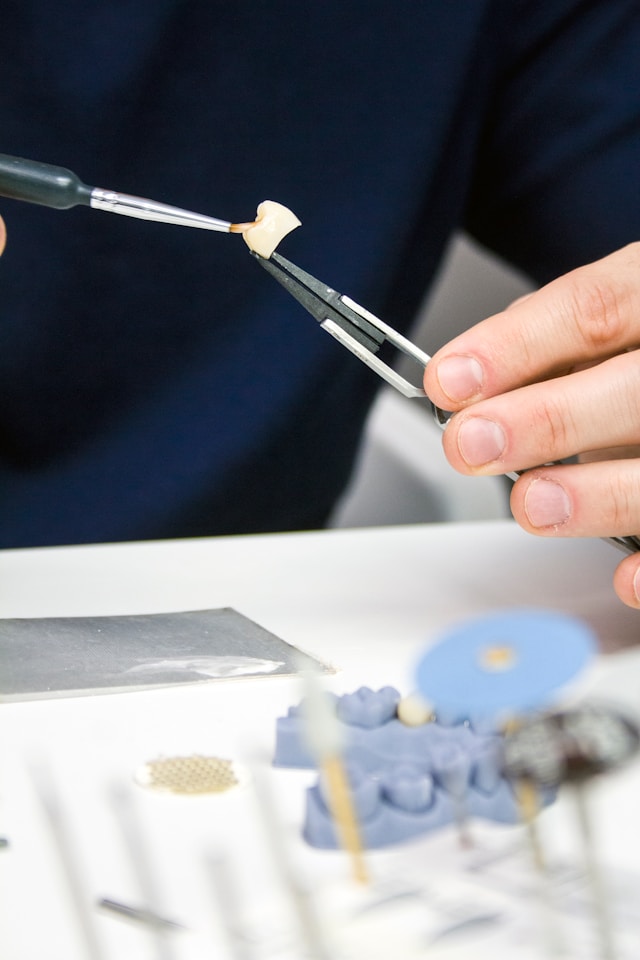
Our Melbourne CBD clinic provides porcelain, zirconia, Emax, PFM, and metal crowns. The type of crown recommended will depend on the location of the tooth and the level of restoration required. A consultation is needed to assess which type of crown is appropriate and to explain the costs and risks involved.
You can book an online consultation or call (03) 9042 0483.
Results vary from person to person. To read more on treatment risks and considerations, please see here.

Dental crowns typically cost between $1,000 and $2,500. The cost varies depending on the mateiral you choose, with procelain and E-,ax crowns typically costing more. The cost is also impacted by the work required beofre the crown has installed. For example, if extensive dental work is required to remove decay from your tooth before the crown is installed, this can increase the cost. For some patients, dental insurance might be an option to lower the cost of their treatment, but you will need to check that you qualify.
We have outlined our different dental crown options and their price ranges per tooth to help you find the best option. The breakdown includes an average price range and what each option includes.
| Treatment | Price | What's included |
| Zirconia crowns | $1,500 to $2,000 per tooth* | Tooth preparation, custom crown fabrication, and permanent fitting |
| Emax crowns | $1,200 to $2,100 per tooth* | Tooth preparation, custom crown fabrication, and permanent fitting |
| PFM crowns | $1,000 to $2,000 per tooth* | Tooth preparation, custom crown fabrication, and permanent fitting |
| Metal crowns | $1,200 to $2,000 per tooth* | Tooth preparation, custom crown fabrication, and permanent fitting |
| Gold crowns | $1,500 to $2,000 per tooth* | Tooth preparation, custom crown fabrication, and permanent fitting |
| Porcelain crowns | $1,200 to $2,500 per tooth* | Tooth preparation, custom crown fabrication, and permanent fitting |
*Additional costs may apply for consultations, imaging, temporary crowns, and any preparatory dental work (such as root canal treatment). The final cost depends on the material selected and your individual treatment plan. A consultation is required to confirm pricing.
Payment plan options are available to spread the cost of dental crown treatment. Interest-free plans are available. See below for details.
We offer flexible and interest-free dental payment plans for our dental crowns. These plans come with simple terms and easy management options that help you remain in control. Details of our interest-free payment plans for dental crowns include:
You can learn more about our payment plan options and eligibility on our payment plan page, or you can book a consultation appointment to speak to one of our experts and see which payment option is right for you.
We offer several types of dental crowns, from temporary crowns to permanent options in a range of materials. Each type is outlined below:
The dental crown procedure follows six steps, from your first consultation to having a permanent crown placed over your damaged or decaying tooth. The process can vary slightly depending on the type of crown and the work needed before the crown is installed, but you can expect it to follow the steps below:


Below are photos from dental crown cases completed at our clinic. These images have not been digitally altered. Individual outcomes depend on each patient's oral health, the type of crown used, and the treatment plan. The results shown are specific to each patient and do not represent the outcomes other patients may experience.
See our full gallery of dental crown before and after photos.
Any dental procedure carries risks. For full information, see our treatment risks page.


Dental crowns are a tooth-shaped 'cap' placed over decaying or damaged teeth. The crown will restore the tooth to its normal function, shape, and size, helping with eating, speech, and improving confidence in your smile.
Dental crowns can help strengthen broken teeth or any that are worn down by grinding. You can use the crowns to improve the appearance of slightly crooked, misshapen, or discoloured teeth, too. We recommend booking an appointment to see if dental crowns are a good option for you.
Typically, you would need a dental crown if you have damaged or cracked teeth or severe decay, or to improve the appearance of your tooth. Dental crowns are used to address dental health issues or to give you an aesthetic smile. They can also be recommended instead of a large filling or after a root canal treatment to offer protection to the tooth. You can expect one of these reasons to be why your dentist recommends a dental crown.
Dental crowns at our clinic cost between $1,000 and $2,500 per tooth, depending on the material and the complexity of the case.* Metal crowns are generally the lower-cost option, while porcelain and zirconia crowns tend to be more expensive. A consultation is needed to confirm which type is appropriate and to provide accurate pricing.
Payment plan options are available. See our payment plans page for full terms and conditions.
*Additional costs may apply for consultations, imaging, temporary crowns, and preparatory work such as root canal treatment.
Metal, porcelain, stainless steel, PFM, resin, E-max, and zirconia are the most common types of dental crowns. Each crown material is slightly different and will be used for different needs, like your back or front teeth. The different types of dental crowns are summarised below:
Dental crowns will last for 10 to 15 years typically, but their lifespan does depend on the material you choose and how well you care for them. Porcelain crowns are the most durable option for front teeth, while metal and gold crowns are perfect for years of use in your back teeth. Proper aftercare is essential with dental crowns, alongside addressing issues like teeth grinding. We provide you with complete aftercare guidance after your dental crown is fitted to ensure it lasts for years.
Local anaesthetic is used during crown preparation to reduce discomfort. Some patients may experience mild discomfort or pressure during the procedure, particularly if decay removal or extensive shaping is required. Temporary sensitivity after the anaesthetic wears off is common. Your practitioner will explain what to expect before, during, and after the procedure.
The procedure for getting a dental crown starts with a consultation to ensure a crown is the right choice and to discuss your options. Your tooth will then be prepared, and decay or any damaged tooth structure will be removed. Your tooth might also be shaped to help it fit the crown properly, with any other essential dental work carried out here. A custom crown will be created and fitted to your tooth, with dental cement to ensure a permanent crown that stays in place.
During a consultation appointment, the specific steps your procedure will follow will be discussed, and you can ask any questions you may have. Book an appointment with one of our dental experts to learn more.
Dental crowns can fix a variety of problems, including discoloured teeth and weakened or damaged teeth. Dental crowns are also used to restore teeth that are broken and worn down, usually caused by teeth grinding. They can help to cover large cavities and offer additional protection after a root canal treatment. Dental crowns are also used to address any aesthetic concerns with your smile, covering stained teeth or changing the shape to give you a more even smile.
To see what problems a dental crown can help you with, book a consultation appointment with one of our dentists today.
The biggest difference between a crown and a filling is where they sit on your teeth. A crown will cover your entire tooth, acting like a cap, while a filling is inserted into your teeth to fill a gap. Fillings will repair a small area of tooth deay to help preserve natural tooth structure, while a crown will cover severaly damaged or weakened tooth, offering complete protection.
Crowns do require more work than fillings to be installed. When you choose a permanent crown, you can expect a few visits to the dentist, while fillings are often installed in one session.
Dental crowns are easily replaced if they break or wear out. The entire crown is typically removed, and another custom crown will be created and installed. In cases where the crown is severely damaged, you might be fitted with a temporary crown while your new crown is made, allowing you to enjoy some tooth function.
Some times, crowns can be repaired if there is minor damage, but in most cases it will be replaced to ensure longevity and that you can use your teeth as normal. As your crown reaches the end of its lifespan, it is important it is replaced too.
Dental crowns do look natural, especially if you choose a porcelain or E-max crown, which mimics the appearance and sheen of natural teeth. Some crowns, like gold and metal crowns, are more obvious, and typically we will not install these in your front teeth. Instead, they are reserved for your back teeth where you won't notice their apperance as much. When you book a consultation with one of our dentists, they will carefully consider the materal used for your crown and where it is placed in your smile.
Typically, Medicare does not cover dental crowns, especially on the Original Medicare plans. Some Medicare plans will cover dental crowns, but only if dental coverage is listed on your specific plan. When dental crowns are needed to address medically necessary issues, some Medicare plans will cover the cost of dental crowns. Make sure you check your plan carefully to see if dental crowns will be covered.
If your Medicare plan does not cover dental crowns, we offer several payment plans that can help spread the cost of your treatment. Check out our payment plan options to see which is right for you.